What the AI zombie trend is
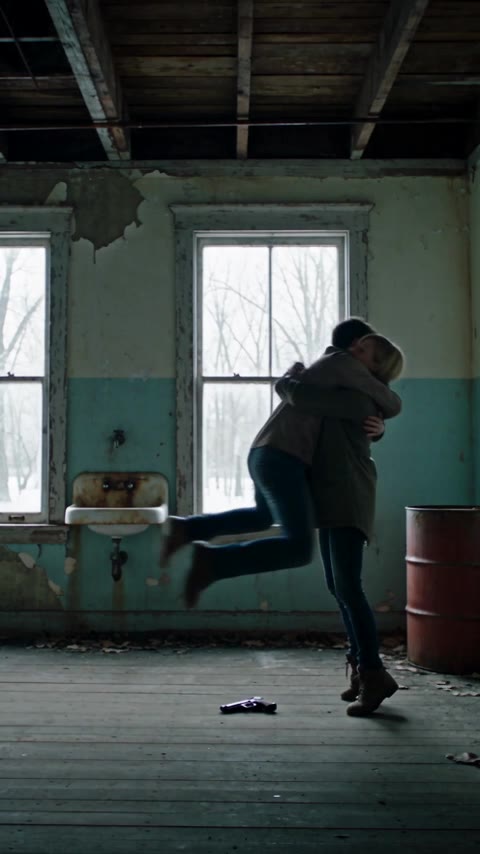
The AI zombie trend is a short video built on a simple reversal: someone you love has turned into a zombie, and you cannot shoot them. You lower the gun, open your arms, and the moment they reach you, the cold scene cuts to a warm memory of the same embrace.
It is usually made from one or two photos with an image-to-video model. The photos give the model the two faces; the story gives it the staging. The result is not a scene from a film. It is a short, fictional clip made for a vertical feed.
The format works because the audience recognises the person before the character does. The tension is not “will the zombie attack?” It is “when will the survivor lower the gun?” The hug is the answer.
The six beats
Most versions follow the same six beats, even when the setting, the cast or the length changes.
| Beat | What happens | What it does |
|---|---|---|
| 1. The standoff | A ruined, grey place. The loved one stands there with ashen skin and clouded eyes. | Establishes the horror and the familiar face inside it. |
| 2. The raised gun | The survivor aims, hands shaking, already crying. The camera holds the survivor's face. | Makes the choice personal; the weapon is not the subject. |
| 3. Recognition | A necklace, a collar tag, a gesture or a familiar tilt of the head. The gun lowers. | Turns the scene from a threat into a relationship. |
| 4. The charge | The zombie screams and rushes at the survivor. | Creates the last moment of fear before the cut. |
| 5. The hard cut | The instant they meet, the grey scene cuts to a warm memory in the same pose. | Makes the embrace feel remembered rather than shown. |
| 6. The memory | Two or three warm moments: laughing, walking, sitting together at sunset. | Releases the tension and gives the clip its aftertaste. |
The cut is the hinge. A fade or a slow transition reads as a scene change; a hard cut reads as a memory surfacing. That is why so many versions ask for “no crossfade” or “hard cut” in the prompt.
Why the ending lands
Recognition. The viewer knows who the zombie is before the character does. The scene is not asking “what is that?” It is asking “can you still see them?”
The reversal. A zombie story usually ends with a shot. This one ends with a lowered gun. The expected violence is replaced by a choice, and the choice is the emotional payload.
The hard cut. Cold to warm in one frame, with the same pose and the same two people. The brain reads the second image as a memory, not a new location.
Real faces. A fictional zombie is scary. A face the viewer recognises is harder to watch. The format is not about the make-up; it is about who is wearing it.
Some creators use the format to remember someone they have lost. That is their choice, and the story can carry it. The format does not require a real loss, and it does not make a medical or therapeutic claim. At its simplest, it is a love story with a horror opening.
The main variants
The couple. The original version: two partners, one turns, the other cannot shoot. It works best when both faces are clear and the recognition detail is something the couple actually wears.
The pet. A dog or cat turns. The collar, the tag or the fur markings are the recognition moment. The pet version is often played warmer than the couple version; the survivor kneels to the animal's height instead of aiming from standing.
The parent. A parent turns, or the survivor is the parent. An old family photo can make the memory half land harder. Use one current photo and one photo from the same period as the memory.
The friend or sibling. A best friend, a sibling or a duo. The memory can be a trip, a concert or a night out. The structure is the same; the cast changes.
All four variants share the same rule: one clear face per photo, one recognisable detail, and a memory that matches the present scene's pose.
What the trend is not
It is not a face-swap. The two photos guide two characters in a newly generated scene; the result is not a cutout of one face pasted onto another video.
It is not real footage. Every frame is generated. The people in the clip are fictionalised versions of the photos, and the scene is a staged story, not a recording.
It is not a gore scene. The visual language is pale skin, clouded eyes and dark veins. The story avoids a gunshot and graphic blood; a small dried-blood detail can appear.
It is not one fixed template. The six beats are stable, but the room, the light, the clothing and the memory can change. That is why the same structure can carry a couple, a pet, a parent or a friend.
It is not a claim about a real person. The video is fictional. Do not use it to suggest that a real person did something they did not do, and do not use a photo of someone who has not agreed to appear.
A short timeline
The format spread on TikTok and Instagram in late September 2026 and was widespread by early October 2026. Pet, parent and best-friend versions followed in October, and Halloween season pushed it further.
The dates come from public trend write-ups and the TikTok tutorial linked in the sources below. The original sound is also linked. Links open on TikTok; if a link is unavailable in your region, the format description above still stands.
How people post it
Most versions are posted vertically, because the format is built for a phone feed. The first frame should show the standoff, not a title card: the viewer needs to see the two people before the story starts. Keep the sound on; the cut and the snarl are part of the effect.
A caption usually names the relationship — partner, best friend, mum, dad, dog, cat — because the recognition is the point. Hashtags are optional; use the ones that fit your platform and the story, not a wall of unrelated tags.
If you are posting a Halloween version, the cold half can carry the seasonal detail. The memory should still be warm and personal; a costume is not a substitute for the relationship.
FAQ
When did the AI zombie trend start?
Public trend write-ups place the spread on TikTok and Instagram in late September 2026, with the format widespread by early October. The tutorial and original sound linked below are the primary references we could find.
Why is it called the zombie love story?
Because the horror is a setup for a love story. The zombie is someone the survivor loves; the survivor lowers the gun; the scene cuts to a warm memory. The “love story” is the second half, not a separate trend.
Is it scary or gory?
The visual language is pale skin, clouded eyes and dark veins. The story avoids a gunshot and graphic gore. A small dried-blood detail can appear in some versions; it is not a gore scene.
Can I make it with my pet?
Yes. The pet version is one of the main variants. Use one photo of you and one of your dog or cat, with the face and fur markings clear.
Can I make it with one photo?
No. The story needs two roles: the survivor and the person or pet who turns. One photo cannot fill both.
How long is the video?
The trend clips vary. Zombie AI makes a 15-second video with sound. The public reference prompt on this site is a 14-second version for other models.
Sources
These links are the public references for the timeline. We do not link to or name competing tools.